
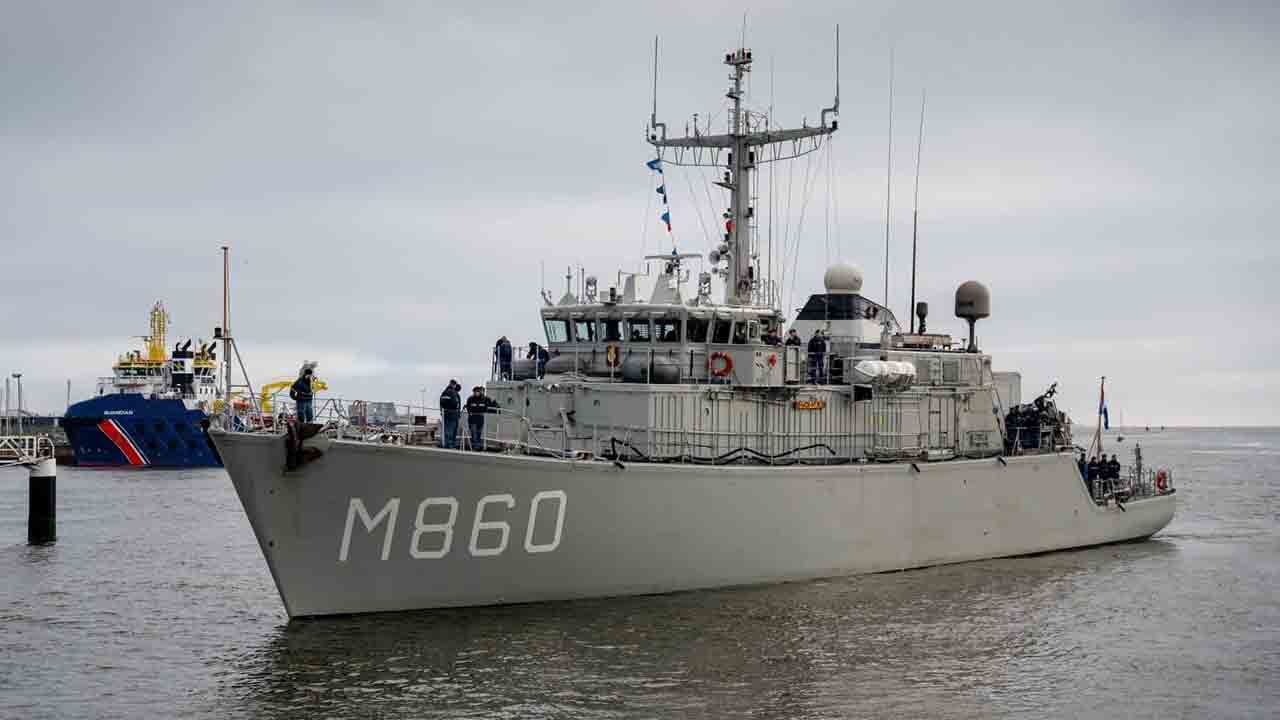
The minehunter Zr.Ms. Schiedam returned to the naval base in Den Helder after taking part, since January, in NATO operations focused on maritime security and the protection of undersea infrastructure in northern Europe.
The Dutch minehunter Zr.Ms. Schiedam returned to Den Helder after completing a mission in the Baltic Sea as part of the Standing NATO Mine Countermeasures Group 1 (SNMCMG1), NATO’s permanent force dedicated to mine warfare.
During the operational period, which began in January, the vessel operated in northern waters of the North Atlantic Treaty area, focusing on the identification and neutralization of explosive devices such as sea mines and remaining aerial bombs. The mission also aimed to strengthen the protection of power and data cables installed on the seabed.
In addition to the Schiedam, the SNMCMG1 naval group included, in recent months, vessels from Belgium, Germany, Estonia and Poland. The Polish ship carried the group’s staff. Throughout the mission, the Dutch minehunter called at ports in Denmark, Germany, Poland and Sweden.
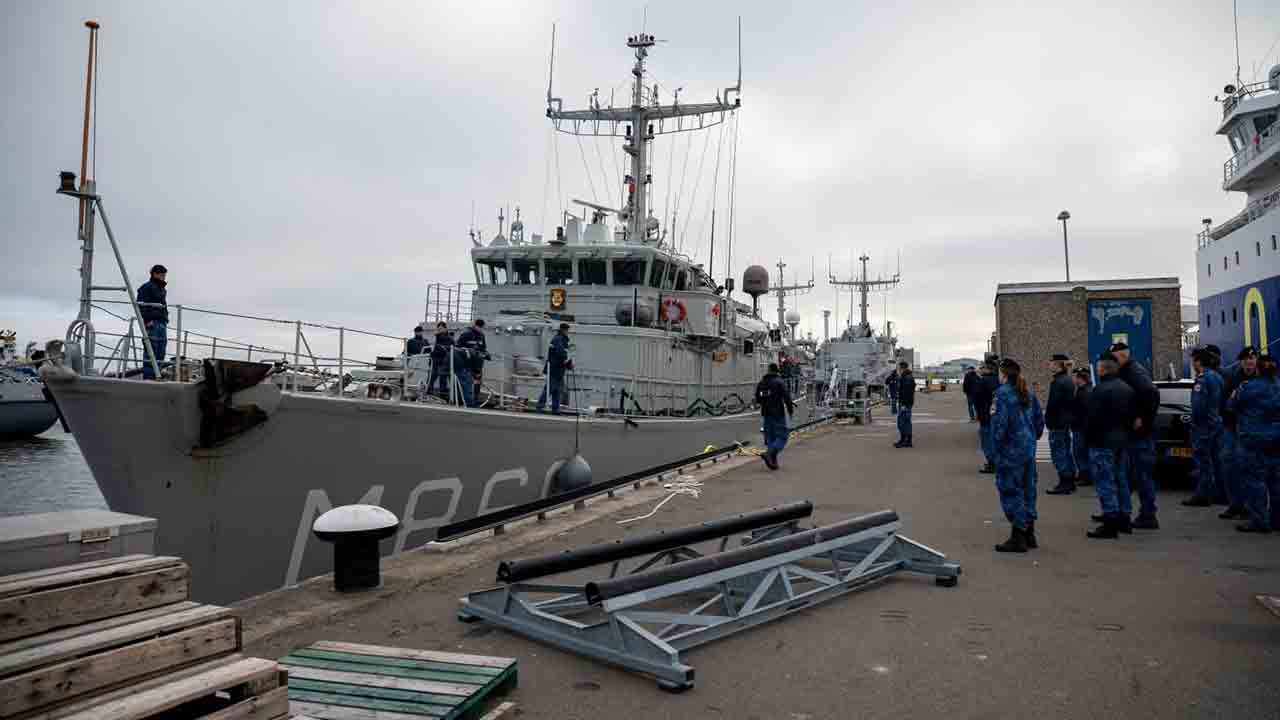
Participation in NATO exercises
In recent months, Zr.Ms. Schiedam also took part in NATO military exercises focused on the security of maritime routes. In February, the vessel joined the Steadfast Dart activity alongside units from countries such as Germany, France, Poland, Spain and Turkey.
The training focused on ensuring safe passage through maritime areas potentially threatened by mines, a capability considered essential for naval mobility in crisis scenarios.
In March, Schiedam participated in the Baltic Mine Countermeasures exercise, aimed at mine-hunting in an asymmetric threat environment. In this type of scenario, risks may include actions coming from both the air and the undersea environment.
World War II mines and torpedo
The group also joined Baltic Sentry, a NATO operation launched in 2025 to expand surveillance in the Baltic Sea region. The operation pays special attention to the security of critical undersea infrastructure, including communication and power cables.
During activities in the Baltic, the naval group found five sea mines and one World War II torpedo. Locating and removing this type of device remains a relevant task for navigation safety and for the protection of strategic structures installed on the seabed.
Zr.Ms. Schiedam’s participation reinforces the role of minehunters in NATO maritime operations, especially in a region considered sensitive for European security.
+ Tracking suggests third U.S. aircraft carrier heading toward the Middle East
Source and images: Netherlands Ministry of Defence. This content was created with the help of AI and reviewed by the editorial team.
